Cinematic Portrait Photography AI Editing Prompts 2026
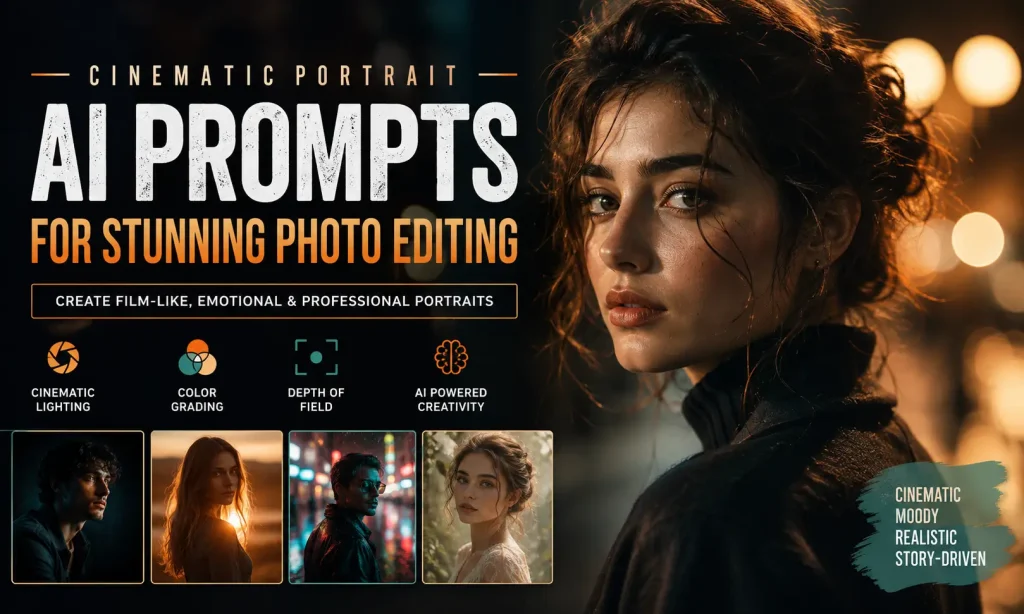
Cinematic portrait photography is a visual style that transforms simple portraits into emotionally rich, film-like images. It combines lighting, composition, and color grading to recreate the look and feel of movie stills. With AI tools, this style has become easier to generate using structured prompts that guide the model toward realistic and artistic results.
At its core, Cinematic Portrait Photography is about storytelling through visuals. Instead of focusing solely on appearance, it emphasizes mood, emotion, and atmosphere, much like how scenes are designed in films.
What are Cinematic Portrait Photography AI Editing Prompts?
A cinematic portrait is defined by how it feels rather than just how it looks. The most important element is lighting, which shapes the subject and creates depth.
Common cinematic lighting styles include:
Along with lighting, composition plays a major role. Most cinematic portraits use a shallow depth of field so the background softly blurs, keeping full attention on the subject. This creates a professional photography feel similar to DSLR or film cameras from Canon EOS or Nikon. Also Try: Best South Indian Look AI Photo Editing Prompts.
Color grading also defines cinematic style. Many images use warm highlights paired with cooler shadows, often called teal-and-orange grading. This gives the image a dramatic but balanced tone.
Why AI Is Changing Cinematic Portrait Editing
AI tools such as Midjourney, Stable Diffusion, and DALL·E have changed how cinematic portraits are created. Instead of manually setting up lights and cameras, users can now describe the scene using prompts.
Editing tools like Adobe Photoshop and Adobe Lightroom are still used for refinement, especially for skin retouching and color correction. AI enhances creativity, while traditional tools polish the final output.
This combination is widely used in:
Best Cinematic Portrait AI Photo Editing Prompts
Below are practical prompt styles you can use for AI generation.
A dramatic cinematic portrait often focuses on intense lighting and emotional expression. It uses low-key lighting, high contrast, and a strong focus on the eyes. This style is inspired by film noir aesthetics and creates a powerful visual impact.
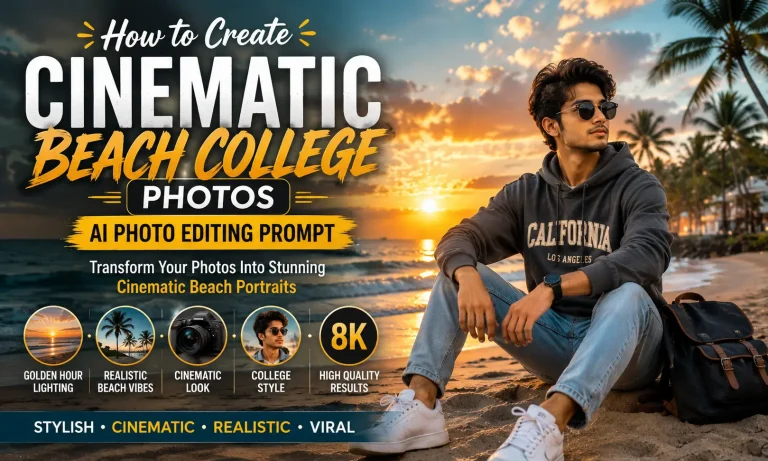
A golden hour cinematic portrait focuses on natural sunlight. Warm tones fall softly on the subject’s face, creating a calm and emotional atmosphere. This style is commonly used in outdoor photography and lifestyle branding.
Urban cinematic portraits introduce city environments, neon lights, and reflective surfaces. These images often look futuristic or cyberpunk-inspired, especially when combined with rain or night lighting.
Soft aesthetic cinematic portraits use pastel tones and natural lighting. They feel light, minimal, and dreamy, often used for social media profiles and creative branding.
Tips for Better AI Cinematic Results
To improve your outputs, it is important to control the structure of your prompt instead of overloading it. Simplicity with clarity often produces better cinematic results.
Best practices include:
Common Mistakes
Many users struggle because they either overcomplicate or underdefine their prompts. A few common issues include:
Fixing these issues usually leads to much stronger AI-generated portraits.
Conclusion
Cinematic portrait photography with AI is a powerful creative method that blends technology with storytelling. It allows anyone to produce professional-looking, film-inspired portraits by understanding how lighting, mood, and composition work together.
The key is not just generating an image but directing a scene. When your prompts are structured properly, AI becomes a tool for cinematic storytelling rather than just image creation.