Best South Indian Look AI Photo Editing Prompts 2026
The South Indian look AI photo editing prompts trend is one of the fastest-growing niches in modern AI image generation. It combines cultural heritage, cinematic photography, and advanced prompt engineering to produce highly realistic portraits using tools like ChatGPT, Google Gemini, and diffusion-based image models.
This aesthetic is deeply connected to South Indian regions such as Tamil Nadu, Kerala, Karnataka, Andhra Pradesh, and Telangana, where fashion traditions, temple architecture, and festival culture create a strong visual identity. When these elements are translated into AI prompts, they generate portraits that feel emotional, cinematic, and culturally authentic.
Why the South Indian Look AI Trend is Going Viral
This trend is not random—it is the result of multiple cultural and technological forces merging together.
One major reason is the explosion of AI-generated visual content on platforms like Instagram, Pinterest, and YouTube Shorts. Users are constantly searching for unique, aesthetic, and culturally rich portraits that stand out in crowded feeds. The South Indian look delivers exactly that because it is visually detailed, emotionally expressive, and highly cinematic.
Another important factor is the growth of prompt engineering awareness. Users now understand that AI models respond better when prompts include structured elements such as clothing, lighting, environment, and emotion. The South Indian aesthetic naturally fits this structure due to its strong visual identity.
Influence from South Indian cinema industries (Kollywood, Tollywood, Mollywood, Sandalwood) also plays a huge role. Movie-inspired portraits, wedding visuals, and celebrity styling trends have made this aesthetic globally recognizable.
Finally, there is a growing demand for identity-based digital content, where users want AI portraits that reflect culture, tradition, and personal expression instead of generic AI faces.
What is South Indian Look AI Photo Editing?
The South Indian look in AI photo editing refers to generating realistic, culturally inspired portraits using AI image generation models.
These portraits typically include:
In simple terms, it is the digital recreation of South Indian cultural beauty using AI tools.
How AI Photo Editing Prompts Work
AI prompts function as structured instructions that guide image generation models. When creating a South Indian look, the prompt must clearly define visual elements such as subject, clothing, background, lighting, and emotion.
A strong prompt usually includes:
This is similar to directing a real photoshoot where AI acts as the photographer, editor, and stylist at the same time.
Best South Indian Look AI Photo Editing Prompts
Cinematic South Indian Saree Portrait
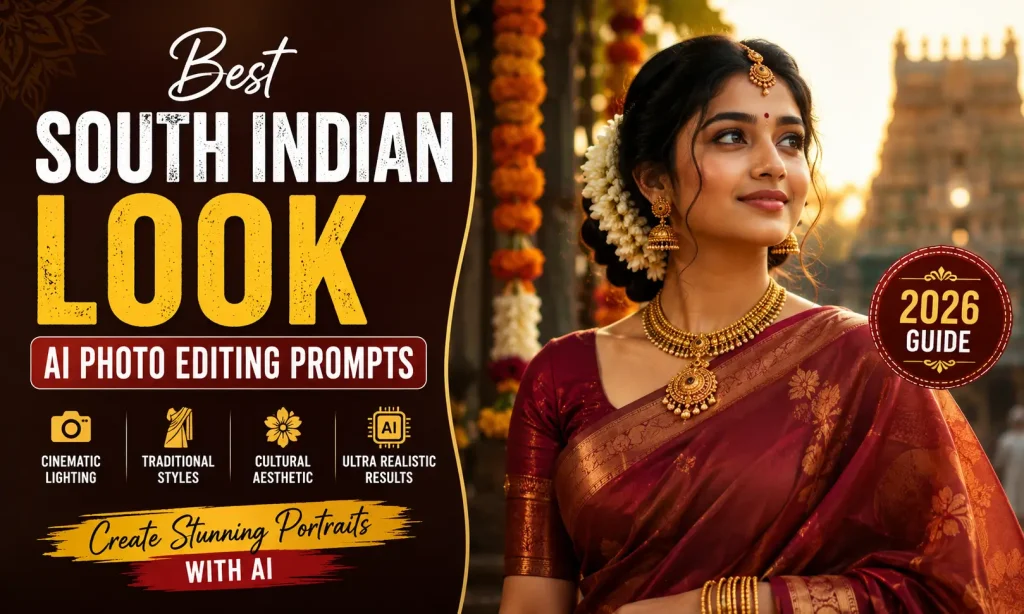
Ultra-realistic portrait of a South Indian woman wearing a traditional Kanchipuram silk saree in red and gold tones, adorned with temple gold jewelry, jasmine flowers braided in long hair, soft natural makeup, standing in a temple courtyard during golden hour sunlight, DSLR 85mm portrait lens, shallow depth of field, cinematic color grading, highly detailed skin texture, elegant expression, 8K realism.
Traditional South Indian Male Portrait
Hyper-realistic portrait of a South Indian man wearing a white veshti with a gold border and traditional shirt, standing near a temple entrance, with warm sunlight falling naturally, realistic fabric texture, confident posture, cinematic photography style, shallow depth of field, documentary-style realism.
South Indian Bridal AI Portrait
Highly detailed bridal portrait of a South Indian bride wearing heavy temple gold jewelry, red silk saree, jasmine flower bun hairstyle, traditional bridal makeup, sitting in a decorated wedding mandap, soft cinematic lighting, emotional expression, DSLR depth-of-field effect, ultra-realistic skin rendering.
Modern Fusion South Indian Fashion Portrait
Stylish modern South Indian woman wearing an Indo-western fusion outfit inspired by silk textures, elegant studio lighting setup, minimalist background, fashion editorial photography style, confident pose, ultra-realistic skin tone, and high-end magazine aesthetic.
Advanced Prompt Engineering Techniques
To improve AI-generated South Indian portraits, you must refine how prompts are structured.
Lighting is one of the most important factors. For example:
Camera simulation also improves realism. Adding terms like “85mm lens,” “f/1.8 aperture,” or “DSLR portrait” helps AI generate depth and focus effects.
Emotional direction is equally important. Expressions like calm, elegant, confident, or natural smile make portraits feel more human and relatable.
Why This Trend is Growing So Fast
The South Indian AI portrait trend is growing because it sits at the intersection of multiple digital and cultural shifts.
It is driven by:
Together, these factors make the trend highly shareable and visually powerful.
Common Mistakes
Many users fail to get realistic results because of simple but critical mistakes.
Some common issues include:
Avoiding these mistakes significantly improves output quality.
Use Cases of South Indian AI Portraits
These AI-generated images are widely used across digital platforms.
They are popular for:
They also connect strongly with AI art communities and visual SEO content strategies.
Best Practices for Viral AI Image
To create high-performing AI portraits, focus on combining cultural identity with cinematic storytelling.
Keep prompts structured and include:
Avoid clutter and maintain one strong visual concept per prompt for best results.
Conclusion
The South Indian Look AI Photo Editing Prompts trend continues to grow because it merges culture, fashion, and AI creativity into a single powerful visual system. It is not just about generating images—it is about recreating identity, emotion, and cinematic storytelling using structured prompt engineering.
When you combine cultural entities + fashion styling + cinematic photography + AI intelligence, you create visuals that are highly realistic, emotionally engaging, and perfectly suited for modern digital platforms.