Viral AI Boys Sad Flower Reels Editing Tutorial 2026
Short-form video platforms like Instagram and TikTok have completely changed how content goes viral. Among the newest trends, the AI Boys Sad Flower reels editing style has quickly become one of the most engaging formats.
This style is not just about editing it’s about emotional storytelling powered by AI visuals. You are not simply creating a video; you are building a mood, a feeling, and a relatable moment that people connect with instantly.
In this guide, you’ll learn everything in detail from generating AI images to editing, storytelling, and optimizing for viral reach.
What is AI Boys Sad Flower Reels Editing?
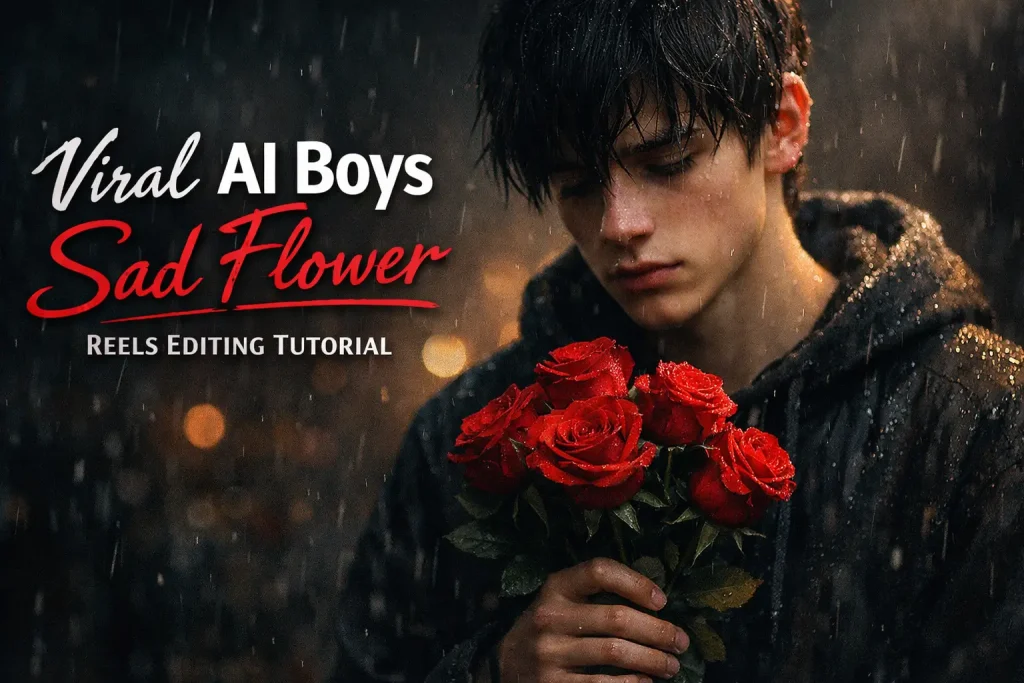
AI Boys Sad Flower editing is a cinematic short video style where a sad or emotional male character is shown with flowers, usually roses, in a dramatic or soft environment. The entire concept revolves around emotion loneliness, heartbreak, silence, or deep thoughts.
These videos are created using AI-generated images or clips and then enhanced with slow motion, color grading, and music to build a powerful emotional atmosphere.
Unlike basic edits, this format focuses on visual storytelling, where every frame contributes to a single feeling. The flowers symbolize emotion, while lighting and movement create depth.
Why This Trend Works So Well
There’s a reason why this trend is dominating reels and shorts. It aligns perfectly with how modern algorithms rank content.
When someone watches a sad or emotional reel, they tend to watch it completely, sometimes even replay it. This increases retention rate, which signals quality to the platform. Emotional content also gets more shares because people relate to it personally.
Another factor is uniqueness. AI-generated visuals look different from real-life videos, which makes users pause while scrolling. That moment of pause is critical it increases watch time and boosts reach. Also try Manali Trance CapCut Template.
The Visual Concept Behind the Trend
Before you start editing, it’s important to understand the structure behind these viral videos.
Most successful reels follow a simple emotional progression. The video usually begins with a calm or neutral scene. Then it slowly builds emotion through movement, lighting, and music. By the end, it delivers a strong emotional moment that encourages replay.
The use of flowers is not random. Roses, for example, are often used because they symbolize love, loss, and memory. When combined with a sad character, they create an instant emotional narrative without needing complex storytelling.
Creating High-Quality AI Images
The foundation of your video is the AI-generated content. If your images are weak, no amount of editing will make the video viral.
When generating images, focus on consistency and realism. The lighting, background, and character style should match across all images. If one image looks cinematic and another looks cartoonish, the video will feel disconnected.
A strong prompt would include details like emotional expression, lighting style, and environment. For example, describing a “sad boy holding red roses in soft cinematic lighting at night” helps the AI produce more realistic results.
Try to generate multiple variations and select only the best ones. Quality matters more than quantity here.
Building the Video Structure
Once your visuals are ready, import them into an editing app like CapCut.
At this stage, think of your video like a mini story. Arrange your clips in a way that feels natural and emotional. Start with a softer scene, then gradually move toward more intense visuals.
Keep the duration short, ideally between 7 to 15 seconds. Short videos perform better because they are easier to replay, and replay value is one of the biggest factors in virality.
Adding Motion to Static Images
This is where your video starts to feel alive. Without motion, your edit will look like a slideshow.
Use slow zoom effects and gentle camera movements. A slight zoom toward the character’s face can create a powerful emotional impact. Side-to-side motion can add a cinematic feel.
The key is subtlety. Movements should be smooth and slow, not fast or distracting. The viewer should feel the motion, not notice it.
Color Grading and Emotional Effects
Color plays a huge role in setting the mood. Most viral sad edits use darker tones with soft highlights.
Reduce brightness slightly, increase contrast, and adjust saturation to create a moody look. Adding a vignette effect helps focus attention on the subject, while a slight blur can enhance depth.
You can also experiment with glow effects or light leaks, but keep them minimal. Over-editing can ruin the emotional tone.
Music Selection and Synchronization
Music is the emotional backbone of your video. Without the right sound, even the best visuals will feel empty.
Choose a slow, emotional track that matches your visuals. Many creators use trending audio from Instagram or TikTok because it increases discoverability.
Once you select the audio, align your clips with the beat. Small changes in visuals should match musical transitions. This creates a smooth and satisfying viewing experience.
Adding Text and Emotional Hooks
Text is optional, but when used correctly, it can significantly boost engagement.
Instead of long sentences, use short emotional phrases. A simple line can make the video more relatable and shareable.
Place the text at key moments in the video, especially during emotional peaks. Keep fonts clean and animations subtle so they don’t distract from the visuals.
Export Settings and Upload Strategy
After editing, export your video in high quality. A resolution of 1080p with a vertical 9:16 ratio works best for reels.
When uploading to Instagram or TikTok, choose a strong thumbnail and write a simple caption that matches the emotion of the video.
Posting at the right time and using relevant hashtags can also improve reach, but the most important factor remains the quality of the content itself.
Advanced Techniques to Improve Virality
Once you understand the basics, you can start adding more advanced elements to your edits.
For example, adding a subtle rain overlay can enhance the sad mood. Particle effects like falling petals can make the video more dynamic. Some creators also combine AI images with real video clips to create a hybrid effect.
Another powerful technique is looping. If your video ends in a way that connects smoothly back to the beginning, viewers are more likely to watch it multiple times.
Common Mistakes
Many creators struggle not because they lack creativity, but because they overlook small details.
One common issue is using inconsistent visuals. If your images don’t match in style or lighting, the video feels unprofessional. Another mistake is overusing effects, which can distract from the emotional story.
Poor music synchronization is another major problem. If the visuals don’t align with the audio, the video loses its impact.
Keeping your edits clean, simple, and emotionally focused will always give better results.
Real Use Cases of This Editing Style
This editing style is not limited to personal content. Many creators are using it to grow niche pages, build audiences, and even promote digital products.
Theme pages focused on emotions, quotes, or aesthetics perform particularly well with this format. It is also widely used in YouTube Shorts and AI art pages.
Because the content is highly engaging, it can help new accounts grow quickly with consistent posting.
Conclusion
The AI Boys Sad Flower reels editing trend is more than just a viral format—it’s a powerful combination of emotion, AI creativity, and smart editing.
If you focus on strong visuals, smooth motion, and emotional storytelling, you can create content that not only looks professional but also connects deeply with viewers.
Start simple, practice consistently, and refine your style over time. With the right approach, even beginners can achieve viral results.