ChatGPT AI Photo Editing Prompts 3 Layer System 2026
AI image generation has evolved far beyond simple text-to-image tools. In 2026, creators are no longer just “generating images,” they are designing structured visual systems using prompt engineering.
One of the most powerful frameworks behind viral AI portraits today is the ChatGPT 3 Layer AI Photo Editing system, a structured method that transforms a single idea into a cinematic, highly detailed image concept.
This system is widely used with tools like ChatGPT, Google Gemini, and image generators such as DALL·E 3 to produce ultra-realistic, Instagram-ready visuals.
The reason this method works so well is simple: it breaks image creation into clear semantic layers, allowing AI systems to interpret structure, lighting, subject, and atmosphere more accurately.
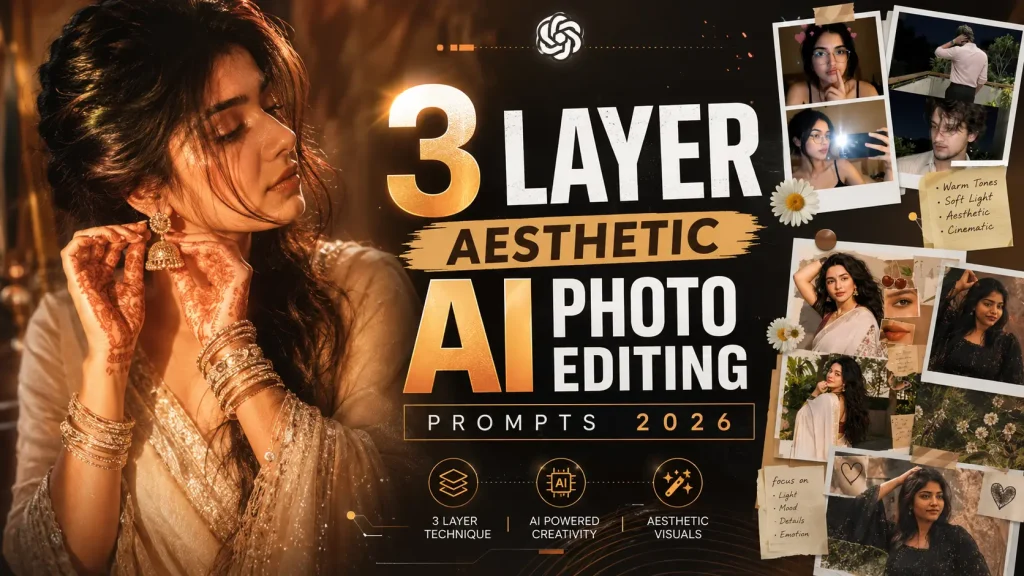
What is ChatGPT 3 Layer AI Photo Editing?
The 3 Layer AI Photo Editing model is a structured prompt engineering approach where an image is designed through three interconnected visual layers:
Background Layer (Environment Design)
This defines the world where the subject exists. It sets the mood, depth, and cinematic context.
Examples include:
This layer is critical because it establishes visual storytelling context.
Subject Layer (Main Focus Element)
This layer defines the human or object in the image. It includes:
This layer ensures the image has a strong identity anchor, making it visually engaging.
Effects Layer (Cinematic Enhancement)
This is where AI creativity becomes powerful. It adds realism, depth, and emotional tone.
Includes:
This layer transforms a normal image into a professional cinematic photograph.
How 3 Layer Prompt Engineering Works
The strength of this system lies in its structured hierarchy. Instead of giving random instructions, you are building a visual architecture.
AI models like Midjourney or DALL·E respond better when prompts follow this layered logic because:
Together, they simulate how professional photographers plan real shoots.
This structure also aligns with modern AI diffusion model behaviour, where clarity of context improves output consistency.
ChatGPT 3 Layer AI Photo Editing Prompts
Below are advanced cinematic prompts designed for modern AI tools. These are not simple templates they are fully structured visual instructions.
Cinematic Cyberpunk Portrait
A hyper-realistic cinematic portrait of a young man standing on a neon-lit rooftop in a futuristic cyberpunk city at night. The background shows glowing skyscrapers, flying holographic ads, and rain reflecting colorful lights on the surface. The subject wears a dark techwear jacket with subtle glowing accents, confident expression, slightly turned head, looking into the distance. The scene is captured with shallow depth of field, cinematic bokeh lights in the background, soft rain particles in the air, and dramatic neon blue and magenta lighting illuminating the face. Ultra-realistic 4K photography style with film grain texture and cinematic color grading.
Golden Hour Aesthetic Portrait
A cinematic ultra-realistic portrait of a young woman standing on a beach during golden hour sunset. The background shows soft ocean waves, warm orange sky, and glowing sunlight reflecting on the water surface. The subject wears a flowing aesthetic dress with natural wind movement, soft smile, and relaxed pose facing the ocean. The lighting is warm golden cinematic light wrapping around her face with natural skin tones. Depth of field creates a soft blurred background, dreamy atmosphere, film-like texture, and professional editorial photography style.
Urban Night Fashion Shoot
A high-fashion cinematic portrait of a stylish male model walking through a modern urban street at night. The background features blurred traffic lights, wet asphalt reflections, and tall glass buildings. The subject wears a minimalist black outfit with streetwear influence, sharp confident expression, walking pose captured mid-motion. Cinematic motion blur effect, neon street lighting, soft fog atmosphere, and dramatic contrast lighting on the face. Shot in ultra-realistic editorial photography style with depth of field and cinematic grading.
Studio Minimal Portrait
A professional studio portrait of a young woman sitting against a clean white background with soft shadow gradients. The subject has natural makeup, calm expression, and elegant posture. Lighting setup includes a softbox key light with subtle rim lighting, creating smooth skin texture and soft facial highlights. Minimal aesthetic style, ultra-clean composition, high-resolution editorial fashion photography look with soft film grain and balanced exposure.
Why 3 Layer Prompt System Works So Well
This system works because it aligns with how AI models process structured semantic input.
Instead of a random description, it provides:
This improves:
In simple terms, you are guiding the AI like a film director designing a scene, not just describing an image. Also, check: Dual Pose Butterfly AI Photo Editing Prompts.
Use Cases of 3 Layer AI Photo Editing Prompts
This system is widely used in modern digital content creation:
Creators use it to build consistent visual identity systems across platforms.
Common Mistakes in AI Photo Editing Prompts
Even with advanced tools, many users fail due to:
Without structure, AI outputs become random and inconsistent.
Pro Tips to Improve AI Image Output
To maximize results:
These small adjustments significantly improve output quality.
Conclusion
The ChatGPT 3 Layer AI Photo Editing system represents a major shift in AI creativity. Instead of simple prompting, creators now design structured visual worlds using layered semantics.
By mastering background, subject, and effects layers, you gain full control over AI-generated visuals, turning simple ideas into cinematic, viral-ready images.
If you apply this system consistently, your AI-generated content will instantly stand out in modern digital platforms.